Portable power stations: capacity, output and charging explained for buyers
Learn how watt-hours, continuous output, surge capability, port selection and recharge methods shape a portable-power product range.
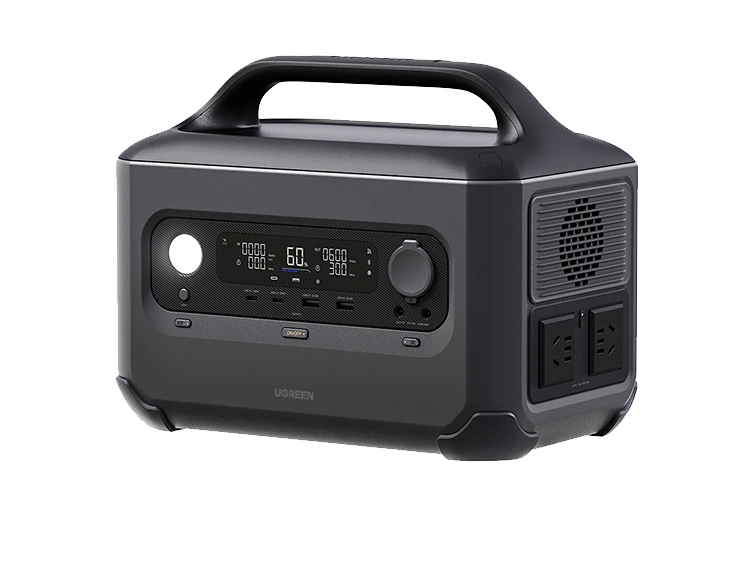
Capacity and output answer different questions
Watt-hours (Wh) describe how much energy the battery stores. Watts (W) describe how much power the station can supply at a moment. A large capacity does not automatically mean that every high-power appliance is supported, and a high output rating does not tell you how long the load will run.
Real runtime is lower than a simple division suggests
A rough comparison divides usable watt-hours by the device load, but conversion losses, inverter efficiency, temperature, standby consumption and battery protection reduce real runtime. Treat calculated runtime as an estimate, not a guarantee.
- Ask for the rated capacity and usable-energy methodology.
- Compare continuous output separately from temporary surge claims.
- Check whether the intended appliance has a high startup load.
Ports and recharge methods define the use case
AC outlets support familiar appliances, while USB-C can be more efficient for laptops and cameras. Vehicle and solar inputs matter to outdoor users, but connector type, supported voltage range and maximum input must match the charging source.
- Confirm destination AC voltage, frequency and plug type.
- List required USB-C power levels and DC connectors.
- Quote solar panels and vehicle cables as identified accessories.
Battery logistics must be reviewed before shipment
Portable power stations contain large lithium batteries and require a route-specific transport review. Product availability does not prove that a carrier will accept the proposed shipment. Model-specific battery data, packaging, test evidence and destination requirements should be checked before order release.
Common buyer questions
Frequently asked questions.
Is a 1,000 Wh station guaranteed to run a 1,000 W appliance for one hour?+
No. Conversion losses, operating conditions and protection systems reduce usable runtime. The simple calculation is only a starting estimate.
What is the difference between continuous and surge output?+
Continuous output is the level intended for ongoing operation. Surge output is a short-duration capability used for some startup loads and should not be treated as continuous capacity.
Can one model be shipped to every destination?+
Not automatically. Voltage, plug, labeling, battery documentation, carrier acceptance and local requirements vary by route and must be checked for the exact model.
Turn product knowledge into a precise buying request.
Tell us the destination, products, quantity, configuration and delivery requirements.