DELTA 3 Max Plus: turn watts and watt-hours into a useful buying brief
Separate simultaneous load, startup demand and daily energy before choosing a DELTA 3 Max Plus system or adding batteries.
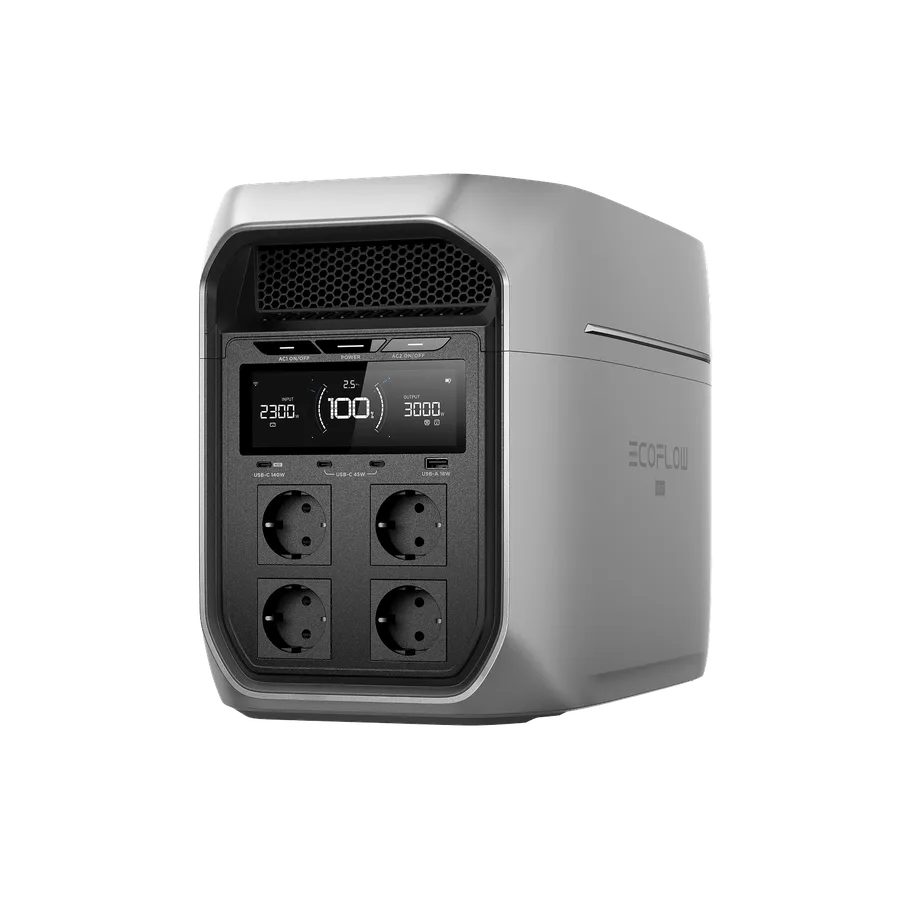
Read two different specifications
The EU reference lists 2,048 Wh of battery capacity and 3,000 W of rated AC output. These describe different constraints: energy stored and power supplied at a moment in time. A larger energy requirement does not necessarily need a larger inverter, while a high startup demand cannot be solved simply by adding watt-hours.
Write down the workday
List every intended appliance, whether it runs continuously, and which devices operate together. Measure representative running demand where safe and practical; a label may describe a maximum rather than normal consumption. Record the equipment that must start while other loads are already operating. Do not use surge or boost advertising as a continuous output guarantee.
Choose the sample question before the bundle
Ask the sample to answer a defined question, such as whether the planned lighting and editing workstation can complete a shift. Log starting charge, ambient conditions, settings and elapsed time. This proposed buyer check is not an independent laboratory result, and it must stay within the official operating limits.
- Keep a reserve for operational changes.
- Price the host and expansion components separately.
- Do not describe battery expansion as an inverter-output upgrade.
Common buyer questions
Frequently asked questions.
Can capacity divided by watts guarantee runtime?+
No. That is only an idealized starting point. Conversion losses, standby demand, temperature, ageing and reserve settings affect the useful energy delivered to the load.
Turn product knowledge into a precise buying request.
Tell us the destination, products, quantity, configuration and delivery requirements.